A forward-looking but grounded view on operational resilience.
For decades, the benchmark for a successful healthcare operation was the assembly line. We built our processes around the idea that efficiency came from repetition, focusing our technology investments on handling massive, predictable volumes at the lowest possible unit cost. This industrial mindset served us well when the goal was simply to scale. However, the primary challenge today has shifted. It is no longer the sheer volume of work that slows us down; it is the staggering variability of that work. The modern operational bottleneck is not how much data we can move, but how many different versions of that data we are forced to manage.
The reality on the ground is that no two transactions arrive looking the same. We are navigating a constant influx of diverse document types, unique provider nuances, and rapidly shifting regulatory requirements. Our legacy systems, which were engineered for consistency, are struggling to keep pace with this fragmentation. To reach the next stage of maturity, we must move beyond raw capacity and begin designing our architecture for operational resilience.
Why Variability Breaks Traditional Models
Traditional models rely on a fundamental assumption that inputs will be consistent. We build static workflows that expect a specific document to follow a specific path every time. But in the modern environment, that consistency is a relic of the past. Documents now differ radically depending on their source, their urgency, and the specific context of the care provided. A clinical record from a rural specialist requires a completely different validation sequence than a standardized form from a metropolitan health system.
When this variety hits a static system, the technology tries to absorb the complexity until it reaches a breaking point. At that stage, the system does exactly what it was programmed to do by rejecting the item as an exception. In a world focused on volume, exceptions were manageable outliers. In a world defined by variability, exceptions become the standard operating procedure. This explains why many leaders find that, despite heavy technology spending, their manual intervention teams continue to grow. We are essentially trying to run a high-speed, multi-lane intersection with the controls of a factory conveyor belt.
What Mature Design Looks Like
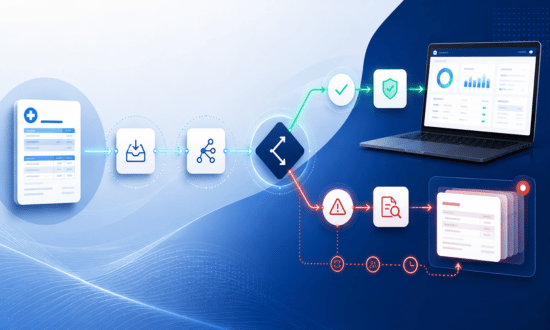
A mature operational design accepts that difference is inevitable. It builds intelligence into the very core of the architecture to handle that difference without requiring a person to step in and fix the process. This means moving toward systems that can adapt in real time instead of simply rerouting every non-standard item to an endless exception queue.
True maturity involves deploying platforms that recognize exceptions as patterns rather than errors. If a particular provider consistently submits information in a unique format, a mature system identifies that pattern, validates the intent, and orchestrates the correct workflow automatically. This is architecture built for change. It uses integrated data and real-time visibility to ensure that, regardless of how an input arrives, it is normalized and verified before it ever reaches the core financial platforms. Success is no longer about how many items we pushed through, but about how few items required a person to stop and solve a puzzle.
The Role of Technology Leadership
This shift changes the fundamental mandate for technology leadership. We are shifting our focus from simple throughput optimization to resilience design. Our goal is no longer just to make the plumbing larger to handle more flow. Our job is to make the plumbing smart enough to detect and adapt to different types of flow.
Supporting operations in this phase means providing tools that reduce fragility. We must avoid building brittle automations that break the moment a regulation changes or a new document type is introduced. Instead, we should champion platforms that offer flexible workflow orchestration and embedded intelligence. This prepares the organization for what is coming next, such as unpredictable growth and new care models, rather than just solving for the volume challenges of the past.
A Closing Thought from Technology Leadership
Maturity in the revenue cycle is no longer about doing more. It is about handling differences without disruption. The organizations that thrive in the coming years will be those that stop fighting variability and start designing for it. By building an intake and processing layer that expects and manages nuance, we create a level of operational certainty that volume-based systems simply cannot provide. That certainty is the true foundation of long-term financial health.
Subscribe To MDI Focus
Signup for free and be the first to get notified on new updates.
Tags
Stay Connected